A sportsbook operator in Southeast Asia launched with 47 sports, 800-plus betting markets, same-game parlays, cash out across all markets, a statistics hub, a loyalty programme, and live streaming integration. Development took fourteen months. The build cost over a million dollars. When the platform went live, traffic data showed that 73% of bets were placed on football and 18% on basketball. The same-game parlay feature, which had taken three months to build, accounted for 0.4% of total bet volume in the first ninety days. The live streaming integration, which required separate rights negotiations and a third-party vendor relationship, was present in 6% of sessions.
The top conversion bottleneck, found during a post-launch audit, was a mobile bet slip that required four taps to confirm a single bet. It had been that way since day one. The team had been building same-game parlays while the core bet placement flow was losing a portion of every mobile session at the confirmation step.
Six months after launch, they rebuilt the bet slip. Conversion improved. The features they had spent most of their budget and timeline on were still used by a small fraction of their player base. The conversion problem that had been suppressing revenue since launch had been sitting in the basic flow the whole time.
This pattern repeats across sportsbook launches in every market. The product roadmap gets built around assumptions about what sophisticated bettors want rather than around data from the specific bettors the platform is trying to reach. The result is a feature-rich product that does not convert or retain as well as a leaner product that has its core flow right.
Why Sportsbooks Overbuild Their MVPs and Pay for It Later
The impulse to overbuild a sportsbook MVP comes from a reasonable place: operators want to be competitive from day one, and competitive sportsbooks in mature markets have large feature sets. The mistake is applying mature-market feature benchmarks to an MVP in a market where most of the target players have never used those features.
An operator entering a new market does not know, before launch, which sports their players care about most, which bet types drive the majority of volume, whether cash out influences retention or just adds infrastructure cost, or whether their players use desktop or mobile predominantly. These are answerable questions, though they require real player behavior data to answer. Building an extensive feature set before that data exists means making development investment decisions based on assumptions rather than evidence.
The cost of overbuilding is not only the additional development time and budget. It is also the organizational attention that went into building and maintaining features that players do not use, which is attention that could have gone into the core flows that determine whether acquired players convert and return. Infrastructure complexity scales with feature count, and a more complex platform is harder to optimize quickly when early data reveals the actual conversion bottlenecks.
The operators who launch lean MVPs and iterate quickly outperform those who launch feature-rich products and optimize slowly. The lean launch produces early data that makes subsequent roadmap decisions evidential rather than speculative. The feature-rich launch produces a larger but less-understood product that is harder to improve because there are too many variables to isolate. Building infrastructure that grows with the player base requires knowing which features the player base actually uses, and that knowledge only comes from operating the platform with real players.
What the MVP Actually Needs to Contain
A sportsbook MVP needs to do one thing reliably: allow a player to find a bet they want to place, place it without friction, and receive a fast and accurate settlement. Everything else is secondary to that core loop. If the core loop is broken or slow or confusing on the device the target market primarily uses, no additional feature set compensates for it.
The practical MVP scope covers six components: user registration and wallet, odds feed integration with the sports and leagues that drive volume in the target market, single and accumulator betting, live betting on major events, payment integration with the specific methods that work in the target market, and basic risk management. These components are sufficient to launch a sportsbook that can validate product-market fit. They are not the complete picture of what the sportsbook will eventually offer, but they are the foundation that everything else is built on.
该 odds feed integration is the component that most directly affects the core loop quality. A feed with inconsistent uptime, slow refresh rates, or missing coverage for the sports the target market cares about produces a live betting experience that drives players away regardless of how good the rest of the product is. Evaluating the feed against the specific market’s content requirements, rather than against a generic global coverage checklist, is the MVP decision that has the most direct impact on early retention.
支付对接 for the MVP follows the same logic: cover the methods that the target market actually uses, ensure deposits are credited instantly, and ensure withdrawals are processed in a timeframe that matches market expectations. Adding more payment methods after launch is straightforward once the foundation is in place. Launching with the wrong methods and low approval rates produces the same silent conversion failure that affects casino operations, where the problem shows up in the data as low first-deposit rates rather than as a visible error.
How to Read Early Data and Build the Right Growth Phase
The purpose of the MVP phase is not just to generate revenue. It is to generate data that makes the growth phase roadmap specific rather than generic. The operators who transition from MVP to growth phase well are those who have been tracking the right signals from day one and who build the next roadmap iteration around those signals rather than around the features they always intended to add.
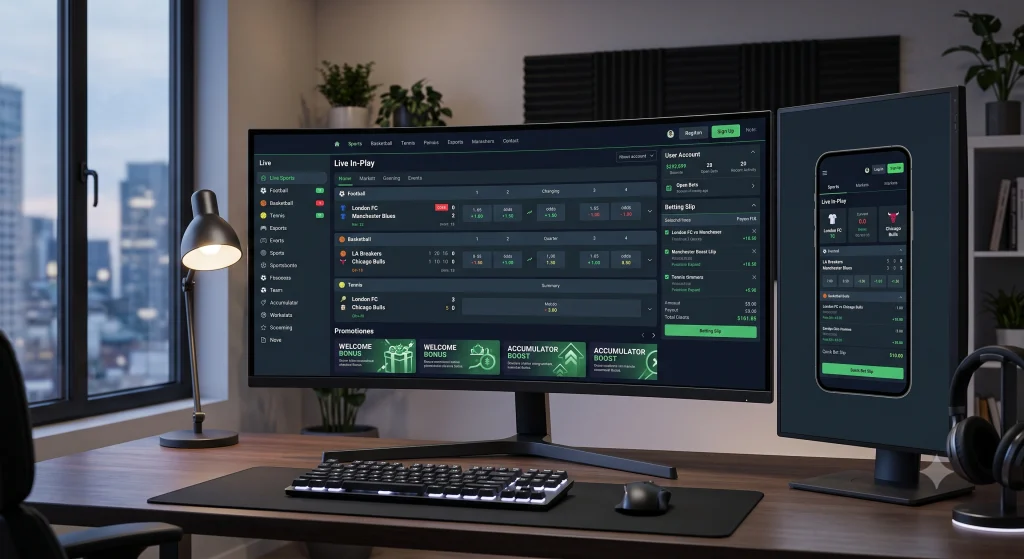
The signals that matter most in the first ninety days are concentrated in the core loop. What percentage of registered players place a first bet? Of those who place a first bet, what percentage return within seven days? What sports and bet types account for the majority of volume, and is that distribution consistent with what was projected? What percentage of mobile sessions result in a completed bet, and where in the bet placement flow do sessions that do not result in a bet end?
Each of these questions points to a specific part of the product. Low first-bet rate typically indicates a problem with the registration or wallet flow, or with the odds display for the sports the player came to bet on. Low seven-day return rate indicates a retention problem: the product did not create sufficient reason to come back. A volume distribution concentrated in two or three sports and bet types is information about where to deepen coverage rather than where to add new categories.
数据分析 that connect the odds layer, the wallet, and the player account system in real time produce the granular view needed to answer these questions at the player segment level rather than only in aggregate. An operator who knows that their football accumulator bettors return at twice the rate of their single-bet bettors has a specific roadmap priority: build the accumulator experience better. An operator who only has aggregate retention numbers has to guess.
The growth phase features that consistently improve the metrics that matter are additions to the core experience rather than new categories of experience. More coverage of the sports that already drive volume, additional bet types within those sports, cash out on the markets with the highest volume, and in-play statistics that support the bet types players are already placing are all extensions of the existing core loop. Same-game parlays, streaming, and social features make sense after the core loop is well-optimized, not before.
Retention, CRM, and the Transition From Betting Site to Player Platform
The shift from MVP to a sustainable sportsbook operation happens when the product develops the infrastructure to retain players across multiple sessions rather than simply providing a place to place bets. A sportsbook without retention infrastructure is a transactional service: players arrive when they have a bet to place and leave when the bet is settled. A sportsbook with retention infrastructure is a platform that players return to habitually, that engages them between major events, and that makes switching to a competitor costly enough that it does not happen automatically.
The retention infrastructure that produces this shift is built on three components: CRM automation that communicates with players based on their behavior rather than on a broadcast schedule, a promotional system that incentivizes return visits with relevant offers rather than generic bonuses, and a loyalty mechanism that creates accumulating value for continued engagement. None of these requires a complex build. They require that the platform has a player data layer that makes behavioral signals available to the communication and promotion systems in real time.
打造玩家黏性 in the first thirty days of a player’s lifecycle depends most on what happens after the first bet is settled. A player who receives a relevant prompt about an upcoming event in their preferred sport within 24 hours of their first settlement is more likely to return than one who receives nothing or who receives a generic welcome sequence. The CRM trigger that produces that prompt is not technically complex; it requires that the settled-bet event flows into the CRM and triggers the appropriate message based on the sport and bet type involved.
VIP management is the retention component with the highest ROI for the sportsbook’s most valuable players. High-stakes bettors who receive personalized account attention, adjusted betting limits, and faster withdrawal processing develop a platform relationship that is not easily replicated by a competitor offering comparable odds. The sportsbook that manages its VIP segment reactively, only responding when a high-value player shows signs of leaving, retains fewer of those players than one that identifies high-value-trajectory accounts early and engages them proactively.
Scaling Infrastructure and Expanding Markets Without Starting Over
The infrastructure requirements of a sportsbook change substantially between MVP scale and mature scale, and the platforms that handle that transition without disruption are those that were built with the transition in mind rather than those built only for launch volume.
The specific infrastructure challenge in sportsbooks that differs from casino operations is traffic pattern unpredictability. A major football match, a championship final, or a significant news event can drive traffic spikes that are an order of magnitude above the platform’s typical concurrent load. Infrastructure that is sized for typical load fails during peak events, which are precisely the moments when the platform has the highest concentration of its most engaged players. Cloud-based auto-scaling architecture that can add capacity within seconds handles these spikes without the manual intervention that fixed infrastructure requires.
Market expansion at scale is a localization challenge as much as a technical one. Adding a new market to a well-architected platform is primarily a configuration task: activating the payment methods that work in that market, adjusting the odds format and market naming conventions to match local preferences, adding language support for the registration and communication flows, and confirming that the compliance requirements for the new jurisdiction are met. A platform that requires a rebuild for each new market makes geographic expansion prohibitively expensive. One built on modular, API-driven architecture makes it a manageable project.
Risk management scaling is the sportsbook-specific infrastructure component that operators most frequently underinvest in during the MVP phase. A manual risk management process that works at low volume becomes a liability at scale when sharp bettor activity, arbitrage patterns, and market-moving behavior need to be detected and responded to in real time. Automated risk rules that flag unusual patterns, adjust limits dynamically, and route manual review only for cases that exceed automated thresholds are the infrastructure that keeps the sportsbook profitable as volume increases.
常见问题
What should a sportsbook MVP include at minimum?
User registration and wallet, odds feed integration covering the sports and leagues with the highest demand in the target market, single and accumulator betting, live betting on major events, payment integration with the methods that have high approval rates in the target market, and basic risk management. These components are sufficient to launch a competitive product, validate product-market fit, and generate the behavioral data that makes subsequent roadmap decisions evidential. Features like same-game parlays, live streaming, and advanced statistics are appropriate for later phases after the core loop has been validated and the player base’s preferences are understood from real data.
How long does building a sportsbook MVP typically take?
On white label or turnkey platforms with pre-built odds feed integrations and payment infrastructure, a functional MVP can be configured and tested in four to twelve weeks depending on the complexity of the payment setup and the number of sports covered. Custom builds from scratch typically take six to twelve months for a true MVP and twelve to eighteen months for a product that includes growth phase features. The timeline is determined more by operator-side preparation than by the platform’s technical capacity: operators who arrive with complete brand assets, a finalized market list, and confirmed payment provider relationships launch faster regardless of the underlying platform type.
When should operators start adding advanced features beyond the MVP?
After the core loop metrics are understood and the product has demonstrated it can retain a meaningful share of acquired players. The specific trigger is not a time threshold but a data threshold: when first-bet rate, seven-day return rate, and bet frequency are stable and understood, the operator has enough information to prioritize growth phase features by their expected impact on those specific metrics. Adding features before those baselines are established means adding complexity to a system whose behavior is not yet understood.
What is the most common roadmap mistake sportsbook operators make?
Building features based on what mature-market competitors offer rather than on what the specific target player base needs and uses. This produces a product with high development cost and high complexity whose actual usage is concentrated in the same two or three features that a leaner launch would have provided. The opportunity cost is the development time and budget that went into unused features rather than into optimizing the core flow that determines conversion and early retention.
How should operators handle infrastructure scaling as traffic grows?
Cloud-based, auto-scaling architecture that responds to traffic spikes within seconds is the baseline requirement for a sportsbook that operates across major sporting events. Fixed-capacity infrastructure that is sized for average load fails during peak events, which is the worst possible time for an outage. Beyond raw capacity, the database and settlement infrastructure need to handle simultaneous bet settlements and wallet updates during high-concurrency events without degrading response times. Load testing the platform before major scheduled events, rather than discovering the capacity limits during those events, is the operational practice that separates platforms that perform reliably during peaks from those that do not.
How does market localization affect the roadmap sequence?
Localization should be treated as a growth phase workstream rather than a launch requirement, with one important exception: payment method coverage for the launch market needs to be correct before go-live. Localizing for a second market involves payment configuration, language support, content adjustments, and compliance review for that market’s jurisdiction. These are parallelizable tasks that can be prepared during the period when the first market is being optimized, rather than sequenced after the first market is fully mature. Operators who build market expansion into the roadmap as a recurring workstream rather than a periodic major project tend to expand more efficiently than those who treat each new market as a separate launch project.
The sportsbook roadmap that produces sustainable growth is not the one that builds the most features. It is the one that sequences the right features at the right stage, uses real player data to validate each decision before the next build begins, and builds the infrastructure to retain the players that acquisition spending brings in. The gap between an MVP and a mature sportsbook is measured in iterations, not in the feature count added at launch.
行业展会是想法变成合作的地方,Gamingsoft在全球iGaming日程上最重要的几场会议中都保持稳定出席。我们参加这些聚会,是为了贴近正在塑造这个行业的运营商、开发商和监管机构。我们许多最稳固的合作,都始于展会上的一次交谈。我们的团队随时乐意讨论游戏聚合合作、市场难题,或者任何您想聊的话题。欢迎访问gamingsoft.com,今天就与我们的业务拓展团队联系。