An operator entered Brazil in early 2024 with a well-built platform, a competitive game library, and a reasonable marketing budget. Their payment setup was built around international card processors. Brazilian card approval rates through international acquirers typically sit between 40% and 55%, workable in some markets, disqualifying in a consumer product where failed payments mean churned players.
Players who managed to deposit found the withdrawal process equally frustrating: the same international cards that processed the deposit did not reliably handle the reversal. Support tickets multiplied. Retention collapsed. The platform was technically sound. It failed in Brazil because the payment experience was broken at the moment it mattered most.
The operator eventually integrated Pix and saw approval rates move above 95% almost immediately. Withdrawal requests that had been taking two to three days settled in seconds. Support volume fell. Player retention improved. Everything that had looked like a product problem turned out to be a payment problem.
Brazil is one of the highest-potential iGaming markets in the world. It is also one where the entry requirements, regulatory compliance, Pix integration, mobile-first UX, and football-driven localization, are specific enough that a generic approach fails regardless of how good the underlying platform is. Operators who succeed here tend to understand the market before they enter it, not through it.
What Brazil’s Regulatory Framework Actually Requires
Brazil’s transition to a regulated online betting and casino market has been underway since federal legislation in 2018, with Law 14.790, enacted in late 2023, establishing the formal legal basis for fixed-odds sports betting and online gaming. The Secretaria de Prêmios e Apostas, known as the SPA, holds responsibility for licensing and oversight. By 2025, Brazil had become one of the largest formally regulated iGaming markets in the world by player volume.
The compliance obligations are substantive. Operators must establish a Brazilian legal entity, meet minimum capital requirements, and demonstrate financial and technical capacity before an authorization is granted. Ongoing requirements include KYC verification for all players, AML transaction monitoring, responsible gambling tools covering mandatory deposit limits and self-exclusion, and regular reporting to the SPA. The regulator has been clear about its intention to audit these obligations actively, not simply verify that the features exist in the platform.
Sports betting holds the primary regulatory track. Online casino gaming, including slots and live casino, is addressed under the same law yet with different product authorization categories. Operators who build a full casino game library under a sports-only authorization create compliance exposure. This is one of the more common planning errors in initial market entry, and it tends to surface during the technical audit rather than before it.
The timeline runs longer than most operators expect. Even well-prepared applicants with complete compliance infrastructure face SPA review periods that cannot be compressed. Operators who enter via a locally licensed partner move faster, yet they still carry compliance obligations through that relationship that need to be understood clearly before any agreement is signed. Understanding what an iGaming platform needs to support in terms of API reporting, data handling standards, and technical certifications helps identify whether a chosen platform will pass the SPA’s technical audit before the process begins.
Pix and Why the Payment Layer Determines Market Outcomes
Pix is not an optional payment method in Brazil. It is the primary financial infrastructure through which most Brazilian consumers move money, and its dominance in iGaming deposit and withdrawal flows reflects the broader reality of the market.
Brazil’s card market operates differently from Europe or North America. Domestic card approval rates through international processors are low by design: the banking infrastructure, fraud scoring systems, and issuing bank policies all contribute to decline rates that make international card processing unviable as a primary deposit method. Boleto bancário is still used but involves confirmation delays of one to three business days. Pix changed all of this. It is instant, available around the clock, and approval rates are determined by whether the sender has funds available rather than by processor logic.
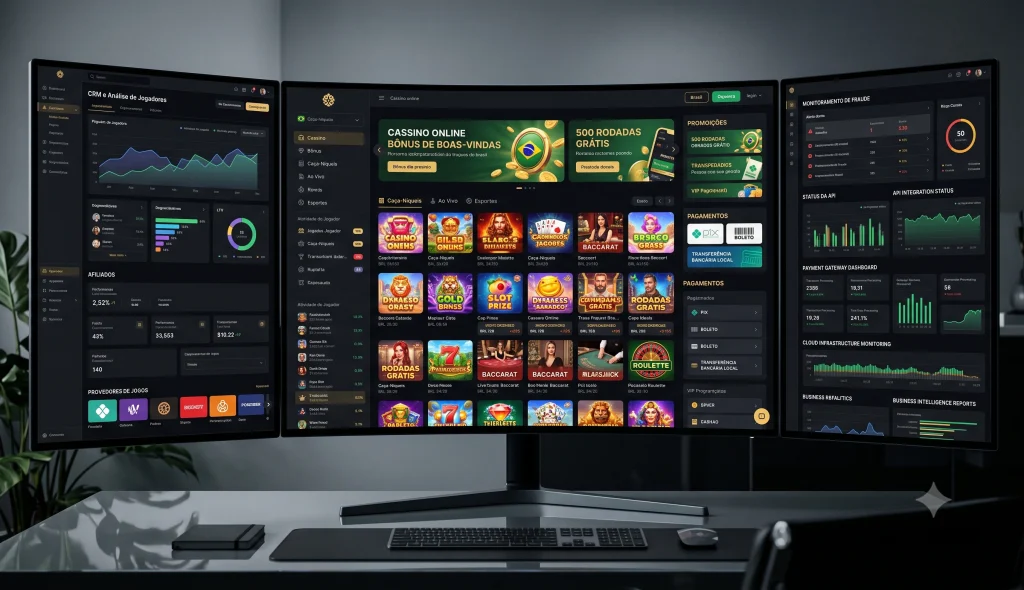
For iGaming operators, this produces a straightforward requirement: Pix must be integrated before launch, with both deposit and withdrawal flows working correctly. A platform that accepts Pix deposits but processes withdrawals through a slower method will generate support volume and churn at exactly the wrong moment, when the player has funds and is deciding whether to stay. The 支付API集成 layer for Brazil should be built around Pix as the default, with card methods and digital wallets as supplementary options rather than the reverse.
Withdrawal speed matters as a competitive dimension in Brazil in a way it does not in slower-payment markets. Players have come to expect near-instant Pix withdrawals because the payment rail supports it. Operators who build payment infrastructure capable of processing Pix withdrawals within minutes tend to see meaningfully better retention on high-value segments. Those who treat withdrawal speed as a nice-to-have rather than a product requirement lose those players to competitors who do not.
Localization, Football, and the Mobile Reality
Brazil is a mobile-first market in a more complete sense than most iGaming guides account for. A significant proportion of Brazilian internet users access the web exclusively through smartphones, and the gambling audience skews even more heavily mobile than the general population. A platform designed primarily for desktop that works acceptably on mobile will lose players in the registration flow, during onboarding, and at every friction point where a desktop-optimized interface adds steps on a small screen.
Football is not simply a popular sport. It is the primary cultural lens through which sports betting operates in Brazil. An operator entering without a strong football product, covering domestic league play, Copa do Brasil, international tournaments, and real-time live betting on major matches, will struggle to compete even if every other part of the platform is well-executed. The football calendar drives deposit spikes, and the live betting experience during matches is where engagement peaks.
Portuguese localization goes further than translation. Promotional language, support interactions, SMS and push notification copy, and terms and conditions all need to read as native Brazilian Portuguese, not European Portuguese adapted for the market. The differences are significant enough that Brazilian players notice and respond to them. Customer support in local time zones, from agents who understand the market context, is similarly important. These are requirements for building player trust rather than cosmetic refinements.
Content strategy beyond football shapes long-term retention. Live casino has seen strong growth in Brazil, with local-speaking dealer studios performing particularly well. Crash games and fast-paced formats have built a real audience among younger players. Slots with themes relevant to Brazilian culture or familiar international properties tend to outperform generic libraries. The way 赌场数据分析 is applied to understand which content segments perform across different player cohorts becomes a structural advantage as the market matures and acquisition costs rise.
Platform Architecture and Technology Choices
The technology decision for Brazil entry is partly a licensing question and partly an operational one. Operators entering under their own SPA authorization need a platform that meets the regulator’s technical requirements, which include specific API reporting capabilities, player data handling standards, and security certifications. Not every platform available in the market has been tested against these requirements, and discovering gaps during the regulatory technical audit rather than before it is an expensive problem to have.
The choice between building on a white label platform or developing a custom solution affects timelines, costs, and long-term flexibility in ways that differ from other markets. White label platforms reduce the upfront technical burden considerably: compliance tooling, payment integration for Pix, and game aggregator connections are solved problems on established platforms. The trade-off is less control over product differentiation and, in some cases, dependency on the platform provider’s development roadmap. A custom build gives full control but adds twelve to eighteen months to the timeline and requires the operator to solve every integration problem independently.
For most new entrants to Brazil, the white label route makes sense for the initial launch. The regulatory environment is still settling, competition is intensifying, and getting to market while player acquisition costs are lower than they will be in two years has real financial value. 打造能随玩家规模增长的基础设施 in Brazil specifically means planning for rapid volume growth: a platform sized for 10,000 monthly active players will show strain at 100,000, and the Brazilian market can reach that scale faster than operators expect when acquisition is working.
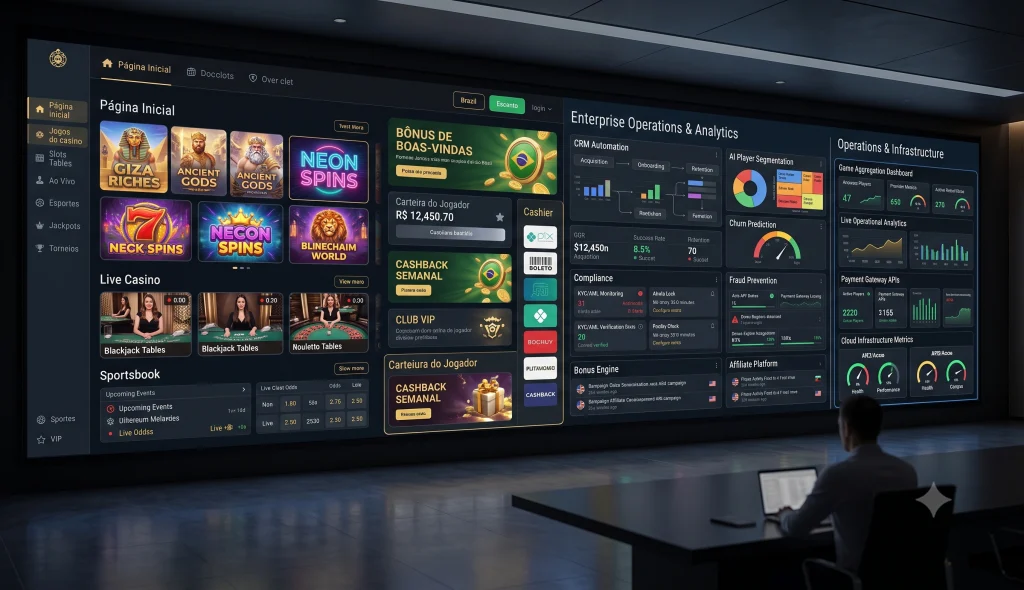
CRM and bonus engine integration are more important in Brazil than in many comparable markets because the acquisition landscape is competitive and player retention is difficult to recover once lost. Operators who build real-time player segmentation, Pix-aware campaign triggering, and lifecycle automation from the start gain a structural advantage over competitors running batch-processed campaigns from disconnected tools.
Market Entry Models and What They Actually Involve
The approach to entering Brazil determines compliance complexity, time to market, and control over the player relationship. The right choice depends heavily on the operator’s existing infrastructure and risk tolerance.
Operating under a direct SPA authorization means the operator controls every aspect of the platform and the player relationship. It also carries the highest compliance burden and the longest setup timeline. Application, entity setup, technical certification, and SPA review can run twelve to eighteen months before a license is in hand. Operators with existing compliance infrastructure from other regulated markets move through this process more efficiently, yet Brazil-specific requirements still need to be addressed independently of what other markets required.
Partnering with a locally authorized operator offers a faster path. The local partner holds the license. The incoming operator typically contributes technology, content, or capital in exchange for a revenue share. This reduces the regulatory burden significantly, yet it also reduces control. If the local partner faces a compliance action, the incoming operator has limited ability to protect their position. Due diligence on any local partner is not optional, and the agreement needs to clearly define which compliance obligations belong to which party.
White label platforms operating under a master license represent a middle path. The platform provider holds the regulatory relationship, and the operator runs their brand on top of the licensed infrastructure. The speed advantage is real: operators can launch in weeks rather than months. The limitation is that white label operators cannot fully differentiate their product at the platform level and are constrained by what the underlying platform offers.
Affiliate-driven entry, where revenue comes from referral traffic to licensed platforms rather than from operating a casino directly, sidesteps the licensing question altogether. It produces revenue without the capital requirements of platform operation, yet it also produces no proprietary player base and no long-term platform asset. Worth considering as a market research step, not as a long-term position in a market growing as fast as Brazil.
常见问题
Is online casino gambling legal in Brazil?
Yes, under the regulatory framework established by Law 14.790 and overseen by the SPA. Both sports betting and online casino gaming are legal for licensed operators who have obtained the appropriate product authorization. The licensing and compliance requirements are substantive: operators must establish a Brazilian legal entity, meet capital requirements, and maintain ongoing KYC, AML, and responsible gambling obligations. Operating without a valid authorization or operating product categories not covered by the authorization are both compliance violations.
Why is Pix essential for iGaming in Brazil?
Because it is the dominant payment method for Brazilian consumers and the only one that delivers the instant deposit and withdrawal experience players expect. International card processors approve a significantly lower proportion of Brazilian transactions than domestic rails do, and slower payment methods create friction at the withdrawal stage that directly drives player churn. Pix approval rates are determined by fund availability rather than processor logic, which makes it structurally superior for iGaming payment flows. Operators who launch without Pix integration face an immediate conversion and retention disadvantage.
How long does it take to obtain a Brazilian iGaming license?
The full process for a direct SPA authorization, from entity setup through technical certification and regulatory review, typically runs twelve to eighteen months for well-prepared applicants. Operators entering via a locally licensed partner or a white label platform operating under a master license can reach market considerably faster, sometimes in weeks, but carry their own compliance obligations through those relationships that need to be understood before committing to the arrangement.
Which market entry model works best for new operators?
It depends on the operator’s existing infrastructure, compliance capacity, and timeline. White label platforms under a master license offer the fastest path to market and the lowest upfront technical burden. Direct authorization gives the most control but requires the longest preparation time. Local partnerships offer a faster path than self-authorization with more product control than white label, but with meaningful partner dependency risk. Affiliate entry is worth considering for market testing but does not build a durable competitive position in a market growing at Brazil’s pace.
How competitive is the Brazilian iGaming market?
Highly competitive and becoming more so. Several major international operators entered Brazil around the time of formal regulation, and domestic brands with deep local knowledge have established strong positions in sports betting. Operators entering now face a more crowded acquisition environment than those who moved early. Differentiation through Pix payment speed, football content depth, Portuguese-language customer experience, and CRM-driven retention matters more as the market matures. First-mover advantage still exists in specific segments and regions, but it is narrowing.
What is the biggest operational risk when launching in Brazil?
Payment infrastructure is the highest-impact risk based on what has happened to operators who got it wrong. Launching without Pix integration, or with Pix deposits but slow Pix withdrawals, creates a broken player experience at the most financially sensitive moment. The second risk is compliance: the SPA’s audit standards are more demanding than some operators expect, and compliance gaps discovered during operation are harder and more expensive to fix than those identified before launch. Building the compliance infrastructure correctly from the start, including KYC, AML, and responsible gambling tooling, is cheaper than retrofitting it under regulatory pressure.
Brazil rewards operators who treat it as a market with specific requirements rather than a version of other markets with a different currency. The payment infrastructure, the football-driven content strategy, the mobile-first product design, and the regulatory compliance obligations are each particular enough that experience in other markets helps but does not substitute for Brazil-specific preparation. Operators who do that preparation before launch consistently outperform those who discover the requirements by running into them.
Gamingsoft是领先的iGaming游戏聚合商,通过单一API集成,帮助娱乐城运营商连接200多家顶级游戏工作室。我们的GS Connect平台提供超过10,000款游戏的即时接入,涵盖老虎机、真人娱乐场、体育博彩和捕鱼游戏——无需与每家供应商单独洽谈。我们支持多币种、多语言,让运营商能够轻松快速地进入新市场。我们的技术团队全天候待命,确保平台运行始终稳定顺畅。无论您是要启动全新平台,还是扩展现有游戏库,Gamingsoft都能提供相应的工具与合作资源,助力您的业务加速增长。欢迎联系我们,了解我们能为您的业务带来哪些帮助。