An operator built their Philippines iGaming business around a POGO license in 2023. The setup was common at the time: a Manila-based operation targeting Chinese players offshore, structured under the Philippine Offshore Gaming Operator framework that PAGCOR had administered since 2016. The model offered a legally recognized base for serving Asian markets from a stable jurisdiction with an established iGaming ecosystem.
In July 2024, President Marcos announced the full abolition of the POGO framework. Operators had sixty days to wind down. The business model that had been the foundation of thousands of iGaming jobs and dozens of licensed offshore operations was eliminated overnight by executive order. Operators who had structured their Philippines presence exclusively around POGO needed to restructure or exit. Those who had built around domestic-facing PAGCOR licenses for Filipino players were unaffected.
The distinction between operating for local Filipino players under PAGCOR and operating as an offshore hub under a now-defunct POGO structure is the most consequential strategic question when approaching the Philippines market in 2026. It is also the one most commonly glossed over in market entry guides that treat “Philippines iGaming license” as a single undifferentiated category. Understanding what the market actually looks like after that structural shift is where planning has to start.
The Regulatory Landscape After the POGO Ban
The Philippines iGaming regulatory environment in 2026 is shaped by two primary licensing frameworks, both administered by PAGCOR: the license for operators targeting Filipino players domestically, and various B2B licenses for companies supplying technology, content, and services to licensed operators without directly serving end players.
PAGCOR-licensed domestic operations can legally offer online casino and sports betting products to Filipino residents. The licensing process involves entity registration in the Philippines, minimum capitalization requirements, technical platform audits, and ongoing compliance obligations covering KYC, AML, responsible gambling tools, and regular reporting. These are substantive requirements, not administrative formalities. PAGCOR’s audit posture has tightened since the POGO shutdown, in part because the offshore model attracted regulatory criticism and the domestic licensing framework has had to carry more scrutiny as a result.
The offshore model that POGO represented is gone. Operators who want to use the Philippines as a base for serving other Asian markets now need to either hold licenses from other jurisdictions, such as Curaçao or Malta, and operate remotely, or obtain B2B licenses that cover technology supply without consumer player-facing operations. Neither path is as straightforward as the POGO model had been, yet the B2B route in particular remains viable: the Philippines has a deep talent pool, established iGaming infrastructure, and a time zone that suits Asian market operations.
Regulatory conditions have also shifted at the local government level. Several municipalities previously known for hosting iGaming operations have updated their ordinances. Operators planning a physical presence need to verify not only national PAGCOR requirements but local zoning and business permit conditions that apply to their specific location. Understanding what an iGaming platform needs to support from a reporting and compliance API perspective matters here: PAGCOR’s technical audit checks specific integration capabilities, and platforms that were not built with those requirements in mind tend to create problems during certification.
Payment Infrastructure for Philippine Operations
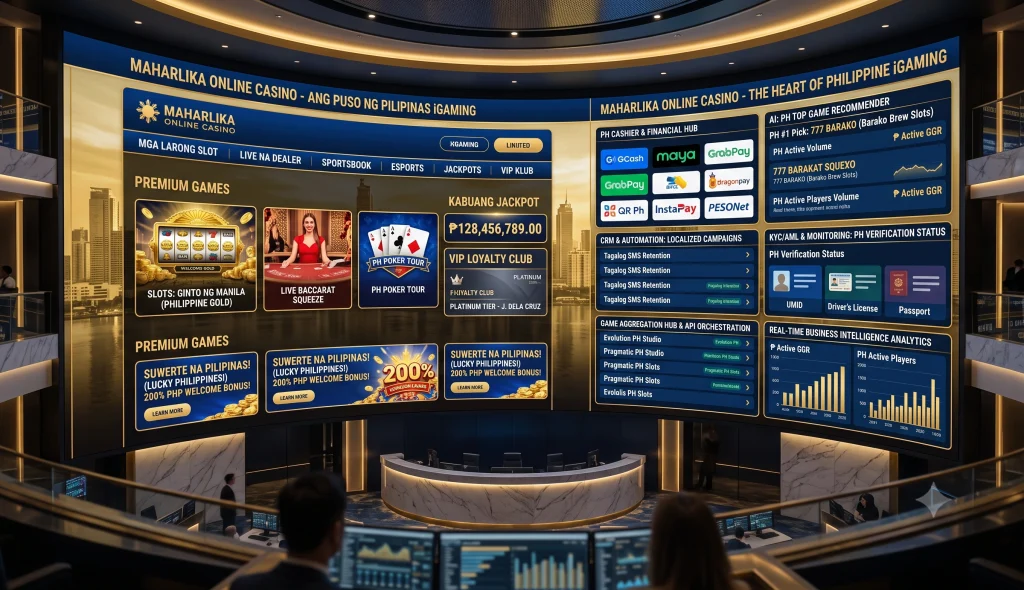
The Philippines has a well-developed domestic payment ecosystem that gives operators serving Filipino players genuine options for fast, localized payment processing. GCash is the dominant e-wallet with over 90 million registered users as of 2024. Maya, formerly PayMaya, holds a strong position particularly among younger urban players. Instapay and PESONet are the interbank payment rails that underpin most real-time bank transfers within the Philippine financial system.
For operators targeting Filipino players, this payment landscape is considerably more favorable than Vietnam or other Southeast Asian markets where gaming payment restrictions create structural friction. GCash and Maya both support gambling transactions for licensed operators, and deposit success rates through these channels are high. The challenge is not getting payments accepted but getting the integration right so that the player experience is seamless across the deposit-to-withdrawal cycle.
Withdrawal speed is a competitive differentiator in the Philippine market. Players have come to expect same-day withdrawals through GCash and Maya because the rails support it and multiple operators have trained the expectation. An operator whose withdrawal processing runs overnight while competitors pay out within an hour will find that player feedback reflects it quickly. The payment API integration architecture needs to be built to support automated, near-instant Instapay withdrawals as a default rather than a premium feature.
Multi-currency support matters for operators also serving players in other markets through the same platform, since a Philippine-licensed operator can legitimately serve players from jurisdictions where their license is recognized. International card processing is used by higher-spending segments and carries considerably better approval rates for Philippine-issued cards than for players in Vietnam or Indonesia, making cards a viable supplementary deposit method rather than a problematic workaround.
Localization, Content, and Player Preferences
Filipino players are mobile-first by a wide margin, and the mobile experience needs to be treated as the primary product surface, not a responsive adaptation of a desktop interface. Smartphone penetration is high, and a significant proportion of gaming activity happens on mid-range Android devices where performance optimization directly affects session length and return visit rates.
Live casino is the highest-engagement product category. Live baccarat performs well, though the Filipino market also shows strong appetite for live poker formats, live sportsbook integrations, and game show-style live casino products that have gained traction globally. Slots are a strong secondary category, and sports betting, particularly basketball alongside football, is important. Basketball occupies a cultural position in the Philippines that differs from most other Asian markets: the PBA and NBA both drive sustained betting volume throughout the year.
English-language content works well in the Philippines because English is widely spoken and reading fluency is high. Filipino is the official national language, and Filipino-language interface options improve conversion among players who prefer it, yet the English-language product does not carry the conversion penalty it would in Vietnam or Thailand. This means localization investment can be targeted at interface options and support rather than requiring a complete content rebuild, which reduces the cost and complexity of market entry compared to markets where English-language UX creates structural friction.
Sports content depth drives acquisition differently than in many comparable markets. An operator with deep NBA coverage, real-time PBA odds, and strong international football markets is positioned to acquire and retain the sports-first player segment that drives a substantial portion of Philippines platform revenue. The way casino data analytics is applied to understand which sport and game categories drive deposit behavior versus which drive session time is a practical advantage operators with good data infrastructure have over those running generic content strategies.
Platform and Technology Choices
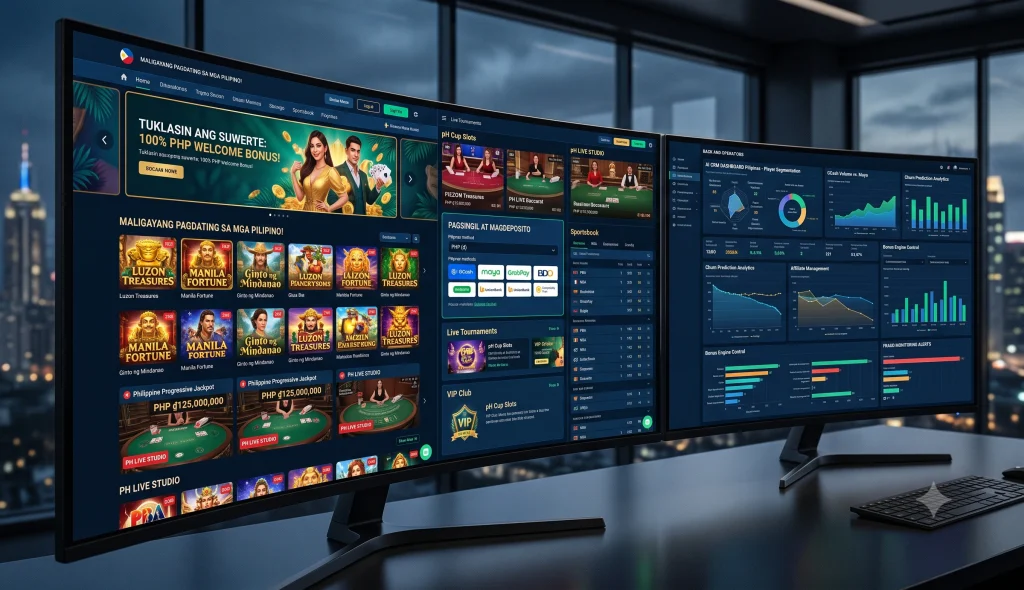
The technology decision for a Philippine operation turns on a specific question: is the operator building for domestic Filipino players under a PAGCOR license, for a B2B market supplying to other operators, or for a cross-market platform that treats the Philippines as one of several geographies?
Domestic-facing operations under PAGCOR need platforms that can pass the regulator’s technical audit. PAGCOR has specific requirements around API reporting, player data residency, and security certifications. Not every platform available in the market meets these requirements out of the box, and finding this out during the audit process rather than before it is an expensive lesson. Checking platform certification status against PAGCOR’s technical requirements before committing to a technology partner should happen early in the planning process.
The choice between white label and custom platform development carries different implications for Philippines operators than for those entering less mature markets. The Philippines has an established technology ecosystem, which means custom development is a realistic option with a larger local talent pool than most Southeast Asian jurisdictions. Operators with longer time horizons and larger capital budgets can build bespoke infrastructure with local engineering teams. Most new entrants find that white label platforms reduce launch complexity in ways that matter: PAGCOR compliance tooling, GCash and Maya payment integrations, and game aggregator connections are solved problems on established platforms rather than custom build tasks.
Building infrastructure that scales with your player base from the start avoids the capacity problems that tend to surface when a platform grows faster than its architecture was designed for, which in the Philippines can happen within the first year of operation if acquisition is effective. The domestic player base is real and accessible through GCash-integrated acquisition, affiliate networks, and sports betting campaigns. Scalability is not a distant concern.
Market Entry Models and What They Cost in Practice
The viable entry models for the Philippines in 2026 look different than they did before the POGO abolition, and operators should approach any market entry guide written before mid-2024 with appropriate skepticism about its licensing recommendations.
Direct PAGCOR licensing for domestic operations is the most controlled path. The operator holds the license, operates the platform, and owns the player relationship entirely. Capital requirements, compliance costs, and operational overhead are all higher than white label alternatives, yet the long-term economics are better because the operator captures the full player lifetime value rather than sharing it with a platform provider. This model is appropriate for operators with existing casino operations in other jurisdictions who understand compliance and have the capital to support a proper Philippines build.
White label operation under a master PAGCOR license is the most common entry model for operators new to the Philippines. The platform provider handles the PAGCOR relationship, compliance infrastructure, and technical certification. The operator builds their brand on top of this infrastructure and focuses on acquisition, localization, and retention. Launch timelines are weeks rather than the twelve-plus months required for a direct license application. The trade-off is margin sharing and product constraints set by the platform provider.
B2B technology supply, providing software, game content, or services to licensed Philippine operators rather than operating a consumer-facing platform, is the third significant model. It sidesteps consumer player-facing compliance requirements entirely and allows operators to monetize the Philippines’ position as a regional iGaming hub without taking on the regulatory risk of direct player management. When evaluating iGaming platform vendors for a B2B role in the Philippines, the depth of existing licensee relationships and the quality of technical integration support are the practical questions that determine whether a B2B business can actually scale.
Frequently Asked Questions
What happened to POGO licenses in the Philippines?
The Philippine Offshore Gaming Operator framework was abolished by President Marcos in July 2024. All POGO licenses were terminated with a 60-day wind-down period. The offshore model that had allowed operators to serve non-Filipino Asian players from a Philippine base no longer exists. Operators who previously held POGO licenses need to restructure under different licensing frameworks, whether PAGCOR domestic licenses, offshore licenses from other jurisdictions, or B2B technology supplier licenses in the Philippines.
What licenses are available for online casino operators in the Philippines now?
PAGCOR issues licenses for operators targeting Filipino players domestically and for B2B companies supplying technology and services to licensed operators. There is no replacement for the POGO framework for offshore operations. Operators wanting to use the Philippines as a base for serving other Asian markets need to hold separate licenses from recognized offshore jurisdictions such as Curaçao or Malta and operate their player-facing platform from those licenses rather than from a Philippine base.
What payment methods work best for Filipino players?
GCash and Maya are the dominant e-wallets and both support gambling transactions for PAGCOR-licensed operators. Instapay enables real-time bank transfers and is the rail behind most same-day withdrawal processing. Card payments work for higher-spending segments and carry better approval rates than in most comparable Southeast Asian markets. Operators should build GCash and Maya integrations as primary deposit and withdrawal methods, because player expectations around payment speed are shaped by what those rails can actually deliver.
How long does it take to get a PAGCOR license?
The direct PAGCOR license application process typically runs six to twelve months for a well-prepared applicant, covering entity registration, document submission, technical platform audit, and PAGCOR review. White label operators launching under a platform provider’s master license can reach market in a matter of weeks, though they carry a different set of obligations and constraints through that relationship. Operators who choose the direct license route should plan for the longer timeline and not defer compliance infrastructure work while waiting for the license to be granted.
Is the Philippines a good market for operators targeting other Asian countries?
The Philippines remains an important iGaming hub for B2B operations, technology development, and regional infrastructure, but it is no longer a viable base for offshore B2C operations targeting Chinese or other Asian players the way POGO had enabled. Operators who want to serve Vietnamese, Indonesian, or other regional player bases need to do so from offshore licenses in other jurisdictions. The Philippines’ value for those operations is now as a technology and operations hub rather than as a licensing base.
What is the typical cost to start an online casino in the Philippines?
Costs vary significantly by model. A white label operation under a master license can be launched with technology costs starting in the low six figures, plus acquisition budget. A direct PAGCOR license application adds licensing fees, legal and compliance costs, and minimum capitalization requirements that typically bring the pre-launch investment into the mid-to-high six-figure range before marketing spend. Custom platform development adds another layer of cost and timeline. The right model depends on the operator’s capital position, risk tolerance, and whether they want to own the full player relationship or operate within a white label structure.
The Philippines iGaming market in 2026 rewards operators who understand the post-POGO regulatory environment clearly and build their business model around what is actually available rather than what was available two years ago. The domestic licensing path is demanding but commercially real. The B2B route is viable for operators with technology strengths. What no longer works is the offshore B2C model that defined much of the Philippines’ earlier iGaming identity. Planning for the market as it is, not as it was, is where successful entry starts.
Gamingsoft is a leading iGaming aggregator connecting casino operators with over 200 top-tier game studios through a single API integration. Our GS Connect platform provides instant access to more than 10,000 games across slots, live casino, sports betting, and fishing games — without requiring separate negotiations with each provider. We support multiple currencies and languages, making it simple to enter new markets quickly. Our technical team is available around the clock to ensure seamless platform performance. Whether you are launching a new platform or expanding an existing game library, Gamingsoft has the tools and partnerships to accelerate your growth. Get in touch to learn what we can do for your business.